











Top-of-mind Questions
What is redaction software?
Redaction software permanently removes or obscures sensitive information from documents, videos, audio, and images before they are shared. Unlike drawing black boxes in a PDF editor, true redaction destroys the underlying data so it cannot be copied, searched, or recovered. Modern tools use AI to detect PII, PHI, and payment data automatically.
What is the difference between redaction and removal?
Redaction permanently destroys the underlying content in a file. Visual masking, like drawing a black box in a PDF editor, only hides it. The original text remains in the document and can be copied or extracted. True redaction burns the masked area into the file and removes the source data, making recovery impossible.
What types of sensitive data can redaction software detect?
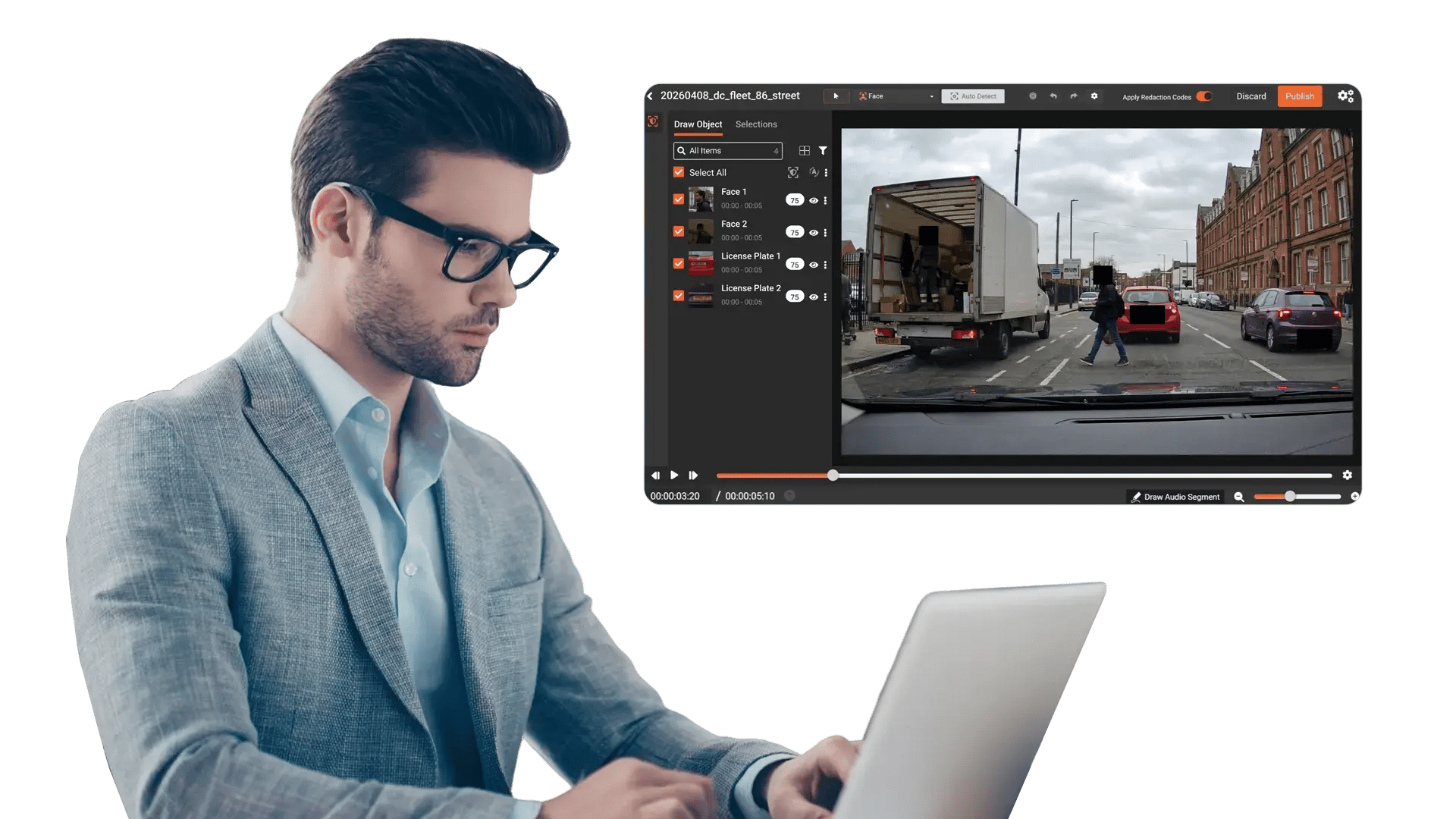
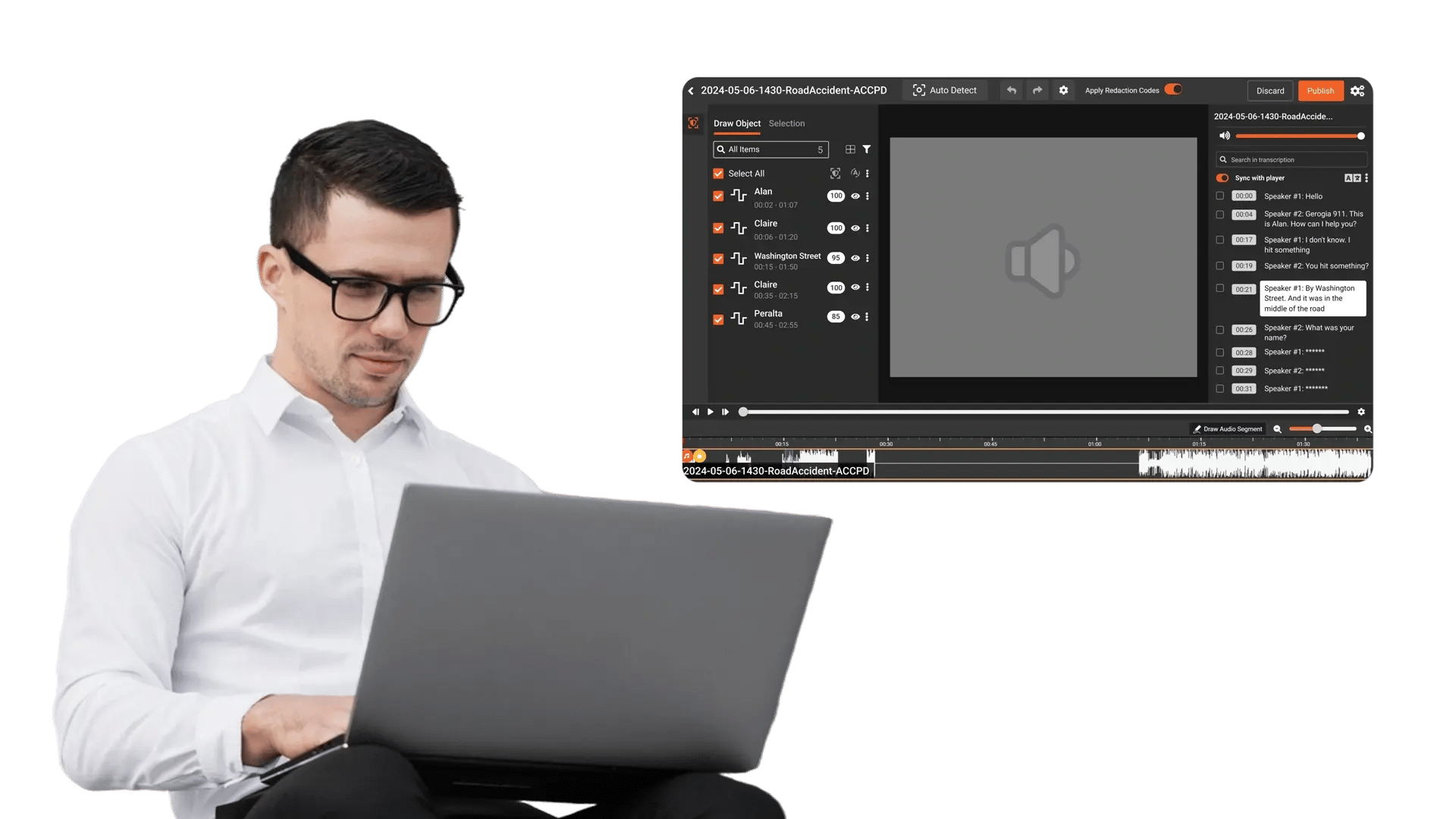
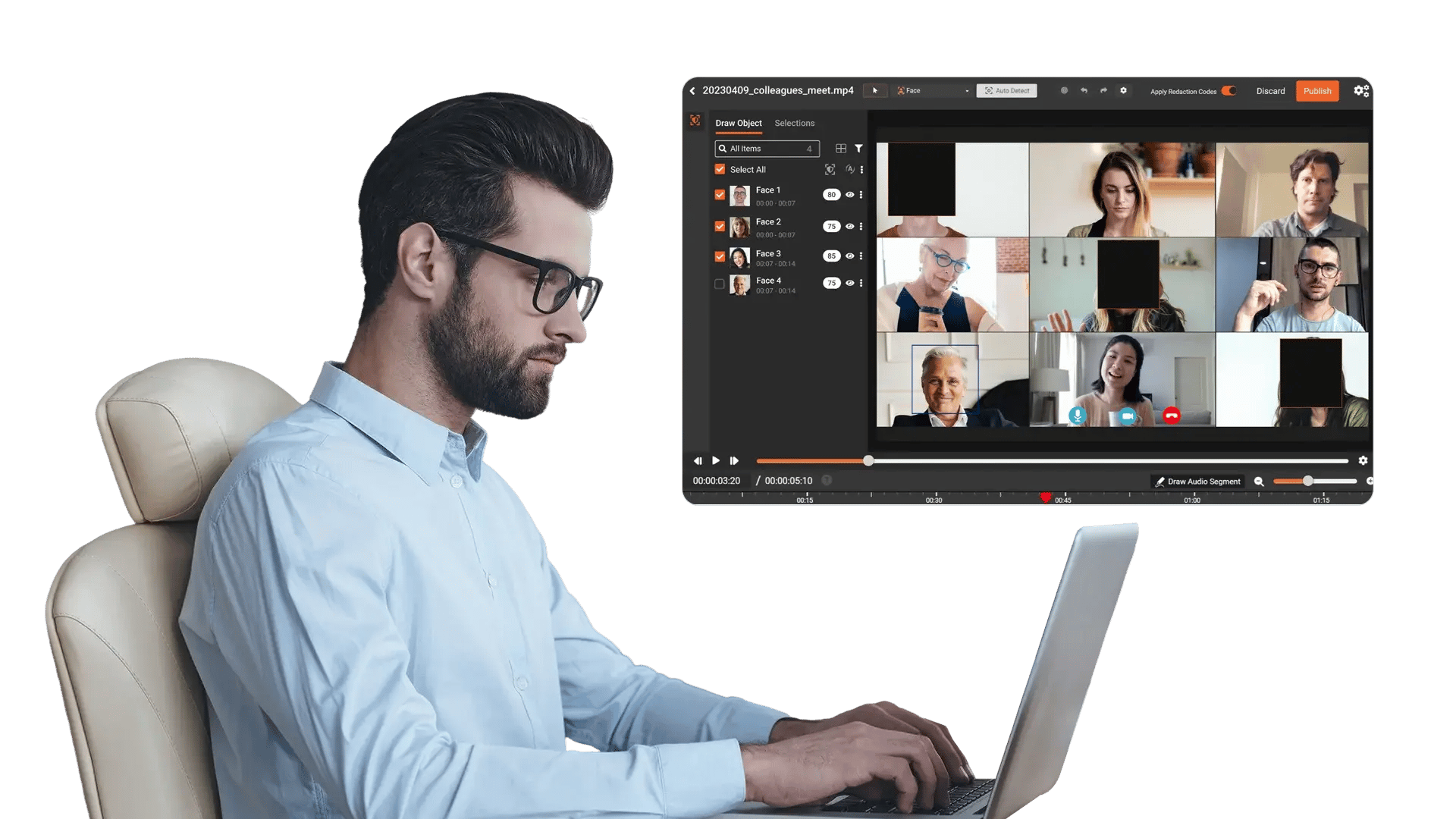
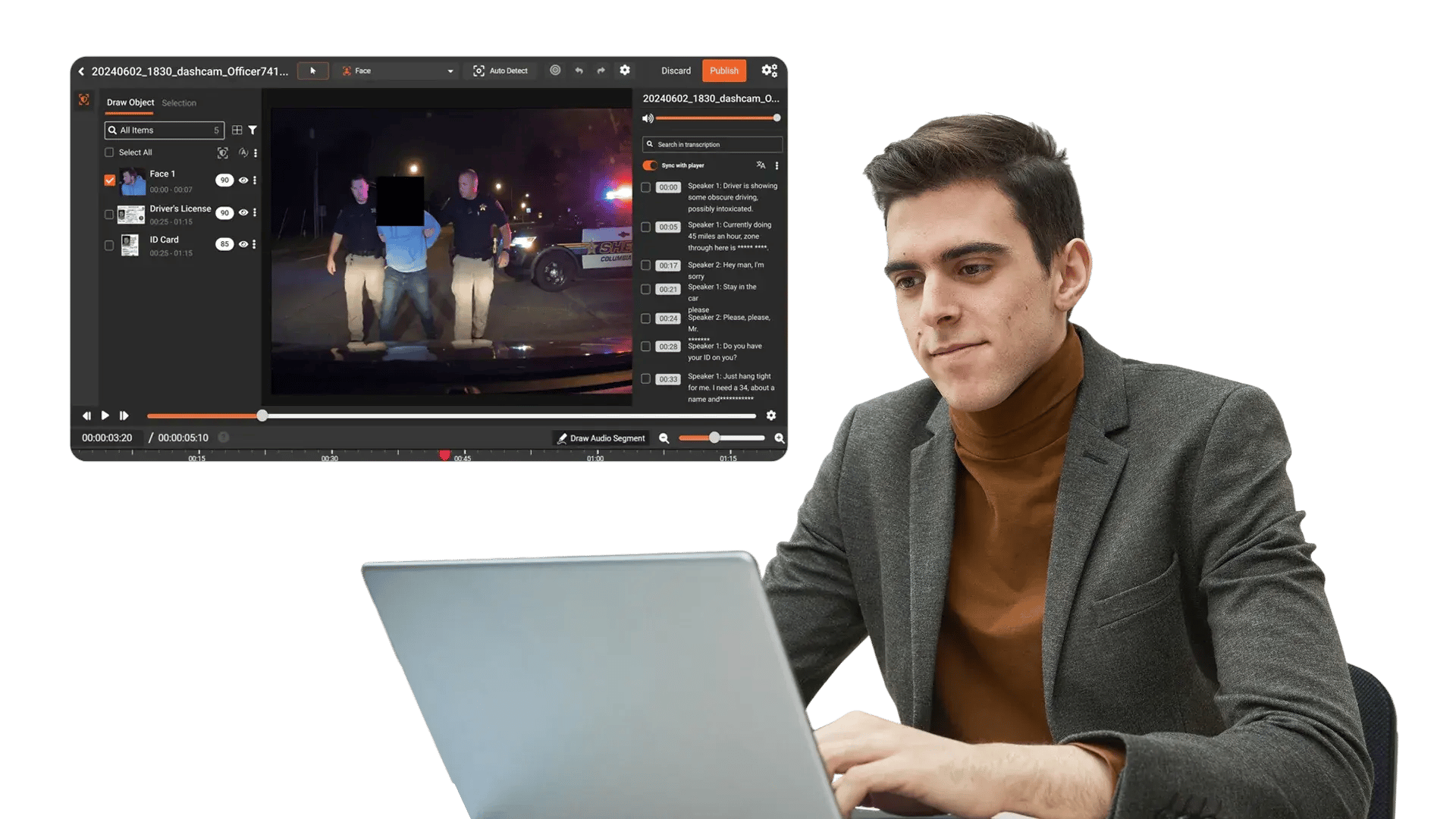
AI-powered redaction software detects personally identifiable information (PII), protected health information (PHI), payment card data (PCI), and financial details. It also detects faces, license plates, vehicles, and screens in video, plus spoken PII in audio. VIDIZMO Redactor detects sensitive content across documents, videos, audio, and images from one platform.
Can redaction software redact videos and audio, not just documents?
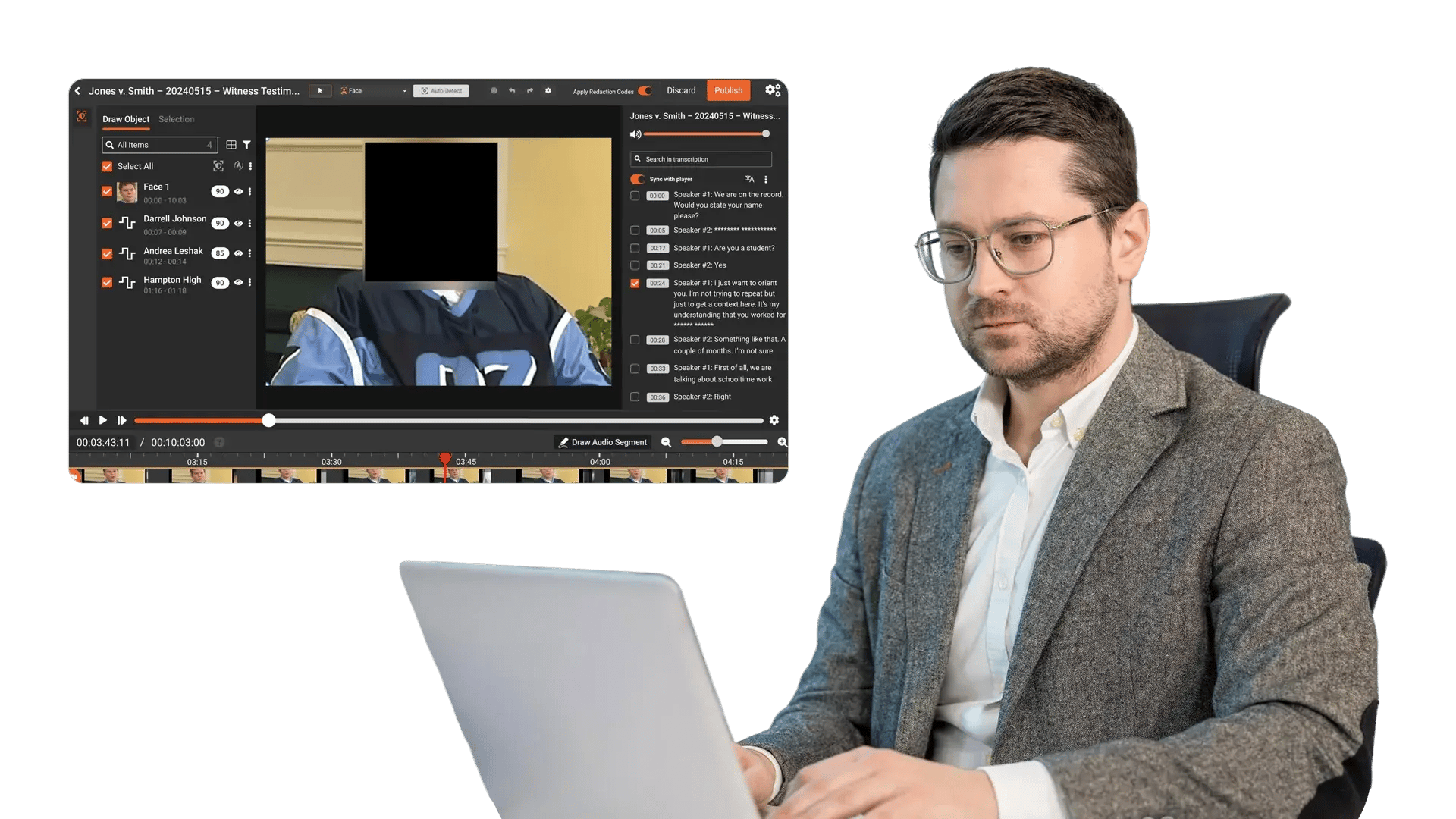
Most redaction tools only handle documents. Video redaction requires object detection across frames, and audio redaction requires speech-to-text with pattern matching. Tools built only for PDFs cannot do either. VIDIZMO Redactor handles videos, audio, documents, and images from one platform, which matters for FOIA responses and other workflows that mix formats.
Does redaction software work on scanned documents and image-based PDFs?
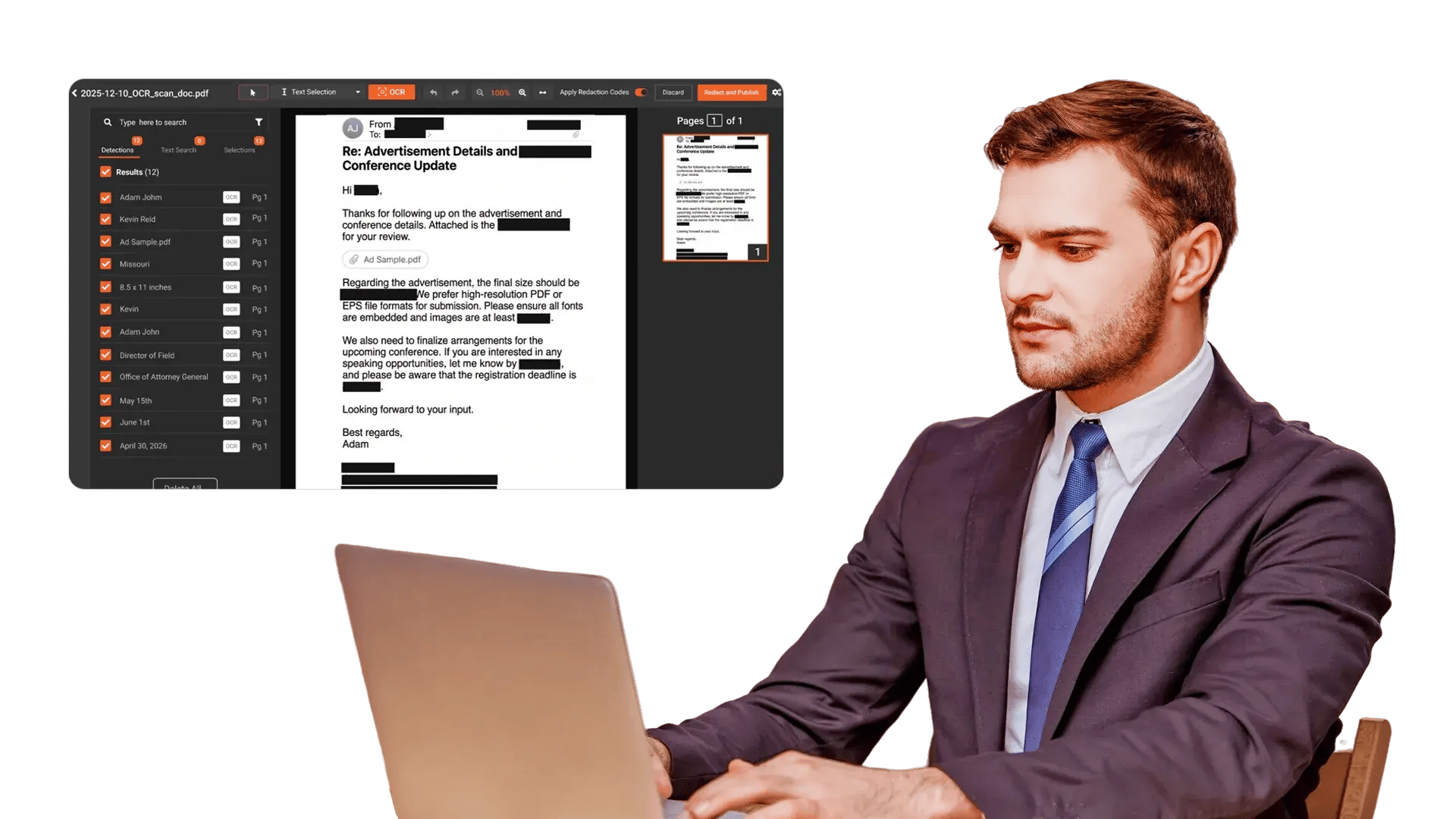
Only if it includes optical character recognition (OCR). Many tools silently skip scanned pages because they cannot read image content as text, leaving sensitive information unredacted. Reliable software runs OCR first, then applies AI detection. VIDIZMO Redactor includes integrated OCR, so paper records and faxed forms process alongside born-digital files.
How does AI redaction work compared to manual redaction?
AI redaction scans a file, identifies sensitive content, and proposes redactions for human review. Manual redaction requires a person to mark each item by hand. NIST research shows human reviewers miss 15 to 20 percent of sensitive data, while AI catches structured patterns like SSNs and credit card numbers with near-perfect accuracy in seconds.
Can redaction software process documents in bulk?
Yes, enterprise redaction software supports bulk processing, applying consistent redaction rules across hundreds or thousands of files at once. This is essential for FOIA backlogs, eDiscovery, DSAR fulfillment, and audio archives. VIDIZMO Redactor supports bulk redaction across all formats, with overnight automated workflows that process queued files without operator supervision.
How do you make sure redactions are permanent and cannot be reversed?
Permanent redaction removes the underlying data, not just the visible rendering. Reliable software deletes the source text from the document layer, strips metadata such as author and revision history, and burns the redacted regions into the output file. Copy-paste, text extraction, and forensic recovery return nothing. VIDIZMO Redactor applies this across all supported file types.
What compliance standards should redaction software support?
Standards depend on the industry. Healthcare needs HIPAA, EU operations need GDPR, government records need FOIA exemption codes, law enforcement needs CJIS, and federal agencies often need FedRAMP. VIDIZMO Redactor supports HIPAA, GDPR, CCPA, FOIA, PCI-DSS, and CJIS-compliant deployments, with FedRAMP availability through Azure Government Cloud and ISO 27001:2022 certification.
Can redaction software be deployed on-premises or in a private cloud?
Yes, though many SaaS-only tools cannot offer this. Government, defense, healthcare, and law enforcement buyers often cannot send sensitive content to multi-tenant infrastructure. VIDIZMO Redactor is available on-premises, private cloud, hybrid, and SaaS, including air-gapped installations and Azure Government Cloud, so data stays in the customer's chosen environment.